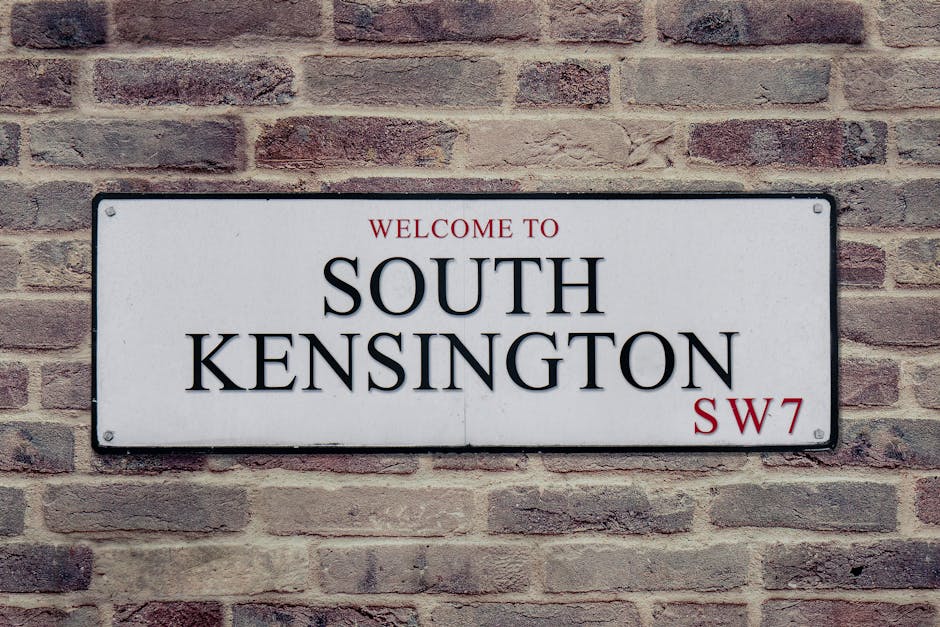
Council parking rules that affect South Kensington removals: what you need to know before moving day
Moving in South Kensington can feel like a juggling act. Narrow streets, busy kerbs, resident bays, timed restrictions, visitors' permits, yellow lines, suspension notices - and that's before the sofa appears. If you are planning a move here, the council parking rules that affect South Kensington removals matter just as much as packing tape and bubble wrap. Get the parking side wrong and a smooth move can turn into a stressful, slow, slightly sweaty mess. Get it right, and the day feels calmer, quicker, and far less expensive in hidden ways.
This guide explains how local parking controls typically affect removals in South Kensington, why they matter, what to check in advance, and how to plan a move that avoids unnecessary delays. It's written for homeowners, tenants, landlords, students, and businesses who want a practical, no-nonsense overview.
- Why council parking rules matter
- How the parking rules work in practice
- Key benefits of planning parking properly
- Who this is for and when it makes sense
- Step-by-step guidance for a smoother move
- Expert tips for better results
- Common mistakes to avoid
- Tools, resources and recommendations
- Law, compliance and best practice
- Options and comparison table
- Real-world example
- Practical checklist
- Conclusion
- Frequently asked questions
Why Council parking rules that affect South Kensington removals Matters
Parking is not just a background detail on moving day. In South Kensington, it can decide whether the removal van parks outside the building, whether the team can keep lifting boxes efficiently, and whether the whole move finishes on time. A single blocked bay or misunderstood restriction can create a knock-on effect that spreads through the day like a domino run.
For removals, the parking setup affects three things most of all: access, time, and risk. If the vehicle has to park further away, you get more carrying distance. More carrying distance means slower loading, extra fatigue, and a higher chance of damage or congestion. If a bay is suspended or a restriction is active, the driver may need to wait, re-park, or adjust the route at short notice. That is where the stress creeps in.
South Kensington is especially sensitive because many streets are busy, the pavement space is tight, and building entrances often sit close to controlled parking zones. Truth be told, a move here is rarely a matter of just pulling up and unloading. A bit of planning goes a long way.
It also matters from a courtesy perspective. Residents, neighbours, and nearby businesses notice when a removal team blocks access or over-stays in a bay. A well-organised move tends to draw less attention for the wrong reasons, which is always nice.
How Council parking rules that affect South Kensington removals Works
While exact rules can change and should always be checked before you move, the parking controls that usually affect removals in this part of London fall into a few common categories. Most of the practical work is about matching the vehicle, the timing, and the location to the right kerbside conditions.
1. Controlled parking bays
These are marked spaces where only certain users may park at certain times. Some bays are resident-only, some are pay-and-display, and some are shared use. For removals, the important question is not just "is there a bay?" but "is this bay available to my vehicle at the time of loading or unloading?"
2. Yellow line restrictions
Double yellow lines and other waiting restrictions can limit stopping, even for short periods. In many cases, a quick drop-off may still be possible only if a specific exemption or agreed arrangement applies. Do not assume a removal van can simply stop anywhere for a few minutes. That assumption causes trouble. Quite a lot of it, actually.
3. Suspensions and temporary restrictions
Sometimes parking bays are suspended for works, filming, building activity, event access, or council operations. These temporary restrictions are easy to miss if you are only looking at the street on moving day. A bay that looks perfect at 8am can be unusable by 10am.
4. Loading and unloading expectations
Loading access is often the big issue. Even where parking is restricted, there may be local arrangements or practical allowances for active loading and unloading. That said, these are usually narrow in scope and not something to rely on casually. The safest approach is to plan as if permission or a formal arrangement may be needed, then verify before the move.
5. Vehicle size and street layout
Some streets in South Kensington are unforgiving for larger vehicles. A big removal truck may struggle to turn, reverse, or park cleanly without careful spotting. That is one reason many moves in the area work better with a more compact vehicle or a staged approach using a smaller van and shuttle runs.
If you are arranging a man and van style move, or a larger job supported by a removal van, parking detail becomes even more important because the right vehicle needs the right space at the right moment. Simple, but not always easy.
Key Benefits and Practical Advantages
Planning around council parking rules may sound boring. Fair enough. But it brings real benefits, and you feel them quickly on the day.
- Faster loading and unloading: shorter carrying distances save time and reduce fatigue.
- Lower damage risk: fewer extra trips across kerbs, corners, and steps means less chance of bumps.
- Less disruption: neighbours and building managers are less likely to complain if the move is tidy and controlled.
- Better timing: when parking is pre-planned, the crew can work to a realistic schedule.
- Reduced stress: you are not improvising outside with boxes in one hand and a phone in the other.
There is also a quieter benefit: better parking planning gives you breathing room. If something slips - and something nearly always does - you have some margin. A tiny cushion in timing can save the whole morning.
For people moving from or into a flat, the difference is often especially noticeable. South Kensington has plenty of buildings where the front entrance and the nearest legal stopping point are not exactly best friends. In those cases, strong parking planning can be the difference between a tidy, professional move and a long, awkward shuffle of furniture down the road. If you're dealing with a compact property, flat removals expertise helps a lot.
Who This Is For and When It Makes Sense
This topic matters to almost anyone moving in the area, but some people feel the pressure more than others.
- Tenants leaving a flat: you often have tight time windows and limited loading space.
- Homeowners moving out of terraced or mews-style properties: street access can be awkward.
- Landlords and letting agents: you may be coordinating a tenant move, cleaning, and key handover on the same day.
- Students: quick, compact moves still need legal stopping space, especially at busy times of day.
- Businesses: office moves can involve more equipment, more staff, and more disruption if access is poor.
If your move involves heavier items, narrow hallways, or an early start, parking planning makes even more sense. The same applies if you are moving on a weekend or during a busy period when kerbside space gets used fast.
For instance, a family moving out on a Saturday morning might assume the road will be quieter. Sometimes yes. Sometimes, by 9am, a delivery van, a bin collection, and a neighbour's visitor all take the spaces you were hoping for. That's London for you.
Step-by-Step Guidance
Here is a practical way to handle the parking side of a South Kensington removal without making it harder than it needs to be.
- Check the street conditions early. Look at your road, the nearest bays, any signs, and the building frontage. Note what is directly outside and what is realistically usable nearby.
- Confirm the move date and time window. Parking restrictions often vary by time of day, day of week, or zone. A move that is easy at one time can be awkward an hour later.
- Identify the best vehicle size. A large truck may not suit a narrow street, while a smaller van may mean more trips. Balance access against efficiency.
- Speak to your building manager or concierge. They may know about loading points, service entrances, lift booking rules, or local frustrations that do not appear on paper.
- Plan for loading and unloading separately. Sometimes the best option is to reserve or secure access at one end first, then manage the rest around that.
- Prepare a fallback plan. If the nearest bay is unavailable, decide in advance where the vehicle can wait legally and how the team will carry items.
- Keep key contact numbers ready. The driver, building contact, and move organiser should be able to speak quickly if something changes. No hunting through messages while furniture is on the pavement.
If you are booking a full house move, it helps to work with a team that understands access planning as part of the job, not an afterthought. A good starting point is a trusted house removals service that takes parking and loading into account from the outset.
For business premises, the same logic applies. Office moves are often time-sensitive, and a blocked bay can throw off the whole chain. That is why many companies look for commercial moves support that can handle access planning as well as the physical relocation.
Expert Tips for Better Results
These are the small things that make a surprisingly big difference. In our experience, this is where the day gets easier or messier.
- Arrive early enough to reset if needed. If a bay is blocked, you want time to adapt without rushing.
- Use a spotter where possible. One person outside guiding the vehicle is often worth their weight in gold.
- Pack "first load" items separately. Boxes, rails, and protective wrap that need to go on first should be ready to hand.
- Keep pathways clear inside. If the lift is booked or the corridor is tight, the flow of items matters as much as the van position.
- Label heavy and awkward items clearly. It helps the crew work in the best order, especially when parking time is limited.
- Protect your nerves with a buffer. A bit of slack in the timetable means a temporary parking issue does not become a meltdown. Been there, seen that.
Expert summary: the best South Kensington removals are rarely the ones that move fastest on paper. They are the ones where access, parking, timing, and load order all work together quietly in the background.
If you are comparing moving support, it can also help to look at whether the provider offers flexible vehicle options. For example, a smaller man with van setup may be better for a cramped street, while larger jobs may suit a moving truck when access is more straightforward.
Common Mistakes to Avoid
Most parking problems during removals come from a few repeat mistakes. Nothing exotic. Just avoidable stuff.
- Assuming the nearest bay will be free. It might be, but do not build the whole move around hope.
- Ignoring temporary suspension signs. These are easy to miss when you are focused on boxes and keys.
- Booking the wrong vehicle size. Too large can mean access problems; too small can mean wasted time.
- Leaving parking checks until the morning of the move. By then, it's too late to calmly fix a problem.
- Forgetting to brief the removal team. They need to know about access restrictions, lift bookings, gate codes, and the best unloading point.
- Blocking the pavement without a plan. Even short-term congestion can upset neighbours and slow the job.
A more subtle mistake is assuming "loading only" means "anything goes". It usually does not. Loading and unloading allowances are often narrow, and they depend on location, timing, and the precise situation. Better to ask questions before, not after, someone is trying to explain themselves beside a hazard light.
Tools, Resources and Recommendations
You do not need complicated systems, but a few simple tools help the move run more smoothly.
- Printed parking notes: keep the key restrictions, access details, and contact numbers on paper as well as on your phone.
- Building access details: lift booking times, concierge phone numbers, gate codes, and any loading bay instructions.
- Clear item labels: colour coding or room labels save time when the van is waiting.
- Protective packing supplies: good boxes, blankets, wraps, and tape reduce handling delays. If you still need to sort materials, packing and boxes can help you get organised before moving day.
- Temporary storage: if parking or access timing is awkward, it can be useful to split the move over two stages. That's where storage can be a sensible pressure valve.
For people who want a more hands-off move, packing support can be just as useful as parking planning. A team offering packing and unpacking services can save a surprising amount of time when access is tight and every minute matters.
Law, Compliance, Standards, or Best Practice
Parking and moving in London touches on a mix of local rules, road use expectations, and building-specific requirements. The exact position can vary, so it is wise to treat this as a compliance-minded task rather than a casual one.
In practical terms, best practice usually means:
- checking the visible street signs before the move;
- confirming whether loading is genuinely possible where you expect;
- respecting suspended bays and temporary restrictions;
- avoiding obstruction to pedestrians, cyclists, and emergency access;
- ensuring the move does not breach building rules, concierge instructions, or lease conditions;
- keeping the removal team informed so they do not make assumptions on the fly.
For many readers, the most useful principle is simple: if parking is uncertain, do not treat it as solved. Build in a plan B. That could mean a smaller vehicle, a staged load, a waiting point, or a later start. The point is not perfection. The point is avoiding preventable friction.
If you are comparing providers, it is worth checking the basics beyond transport. Look at the company's approach to health and safety and insurance and safety, especially if the job involves heavy items, awkward stairs, or tight roadside access. Those details matter more than people realise.
Options, Methods, or Comparison Table
Different South Kensington moves call for different approaches. There is no single best answer, which is a bit annoying, but also useful because it means you can choose what fits your situation.
| Approach | Best for | Parking impact | Main trade-off |
|---|---|---|---|
| Large removal truck | Full house moves with lots of furniture | Needs the most careful access planning | Efficient if the street allows it; awkward if space is tight |
| Removal van | Flats, smaller homes, partial moves | Often easier to park and position | May require more trips |
| Man and van | Flexible, smaller-scale or fast moves | Good for narrow streets and short loading windows | Less capacity for very large loads |
| Staged move with storage | Complex timing, access problems, or delayed handovers | Reduces pressure on the parking window | Requires extra coordination |
For many South Kensington streets, the right answer is not simply the biggest vehicle available. It is the one that can actually stop legally, load efficiently, and leave without creating a scene. That sounds obvious, but in moving, obvious things get overlooked all the time.
Case Study or Real-World Example
Imagine a couple moving out of a second-floor flat near a busy South Kensington street. They have a sofa, several bookshelves, fragile kitchen boxes, and a tight handover slot at midday. Their first idea is to book a large truck and park it directly outside. On paper, it seems neat.
Then they check the street layout. The nearest bay is time-restricted, there is a loading issue near the junction, and the building entrance sits a fair distance from any available legal stopping point. Instead of forcing the issue, they switch to a smaller vehicle, schedule an earlier arrival, and pre-pack the first wave of boxes by room. They also arrange a short-term holding plan for a few items if needed.
The result? The move is not glamorous, but it works. The team parks where it is practical, carries less distance than expected, and finishes without running late. Nothing dramatic. Just a solid, calm move. And honestly, that is the dream.
Now compare that to the version where nobody checks parking until the van arrives. The driver circles the street, the lifting team waits, neighbours get irritated, and the whole thing starts to feel like a small civic drama. Same furniture. Very different day.
Practical Checklist
Use this checklist a day or two before the move. It will save you from a lot of last-minute improvising.
- Confirm the moving date, start time, and expected finish window.
- Check the street signs near your property and the likely unloading point.
- Identify any resident bays, loading bays, suspension notices, or yellow line restrictions.
- Ask your building manager or concierge about lift access and entry rules.
- Choose a vehicle size that matches the street, not just the volume of items.
- Prepare a backup parking or loading plan.
- Share parking notes with the removal team in advance.
- Pack a clearly labelled first-load box for documents, keys, and essentials.
- Keep the pavement and entrance as clear as possible.
- Allow extra time for unexpected delays.
If you are moving a heavy or awkward item like a piano, parking and access become even more important. For those jobs, specialist handling through piano removals can reduce the risk of damage and keep the route under control.
Get a free quote today and see how much you can save.
Conclusion
Council parking rules that affect South Kensington removals are not just a side issue. They shape the pace, safety, cost, and overall calm of the whole day. If you understand the parking restrictions, choose the right vehicle, and plan access carefully, you give yourself a much better chance of a clean move with fewer surprises.
The best approach is straightforward: check the street early, plan for the real conditions rather than the ideal ones, and leave room for a little flexibility. That is how good moves happen in London's tighter neighbourhoods. Not by luck, really, but by sensible preparation.
If you are comparing options for a home move, flat move, or business relocation, consider working with a team that understands both transport and kerbside realities. It makes the day feel more manageable from the first box to the last.
And when the van finally pulls away and the front step goes quiet again, that small wave of relief? Worth planning for.
Frequently Asked Questions
Do I need special permission for removals in South Kensington?
Sometimes, depending on the street, the time of day, and the parking controls in place. In some situations, loading may be manageable without anything special, but do not assume that. It is always safer to check the local conditions in advance and plan accordingly.
Can a removal van stop on yellow lines during a move?
Not automatically. Yellow line restrictions are one of the most common sources of confusion, and the rules can be stricter than people expect. If you are relying on a brief stop for loading or unloading, you should verify what is allowed on that particular street and at that time.
What happens if the nearest bay is suspended on moving day?
Then you need a backup plan. A suspension can force the vehicle to park further away or use a different loading point. That is why it helps to check for temporary notices before the move rather than discovering them when the crew arrives.
Is a smaller van better than a large truck in South Kensington?
Often, yes, especially where streets are narrow or parking is limited. A smaller vehicle can be easier to position legally and may reduce hassle. The downside is that you might need more trips, so the best choice depends on your load and access.
How far in advance should I check parking for my move?
As early as you reasonably can. A few days ahead is ideal, especially if the move is large or the street is busy. Leaving it until the morning of the move is asking for trouble, and nobody needs that.
What should I tell my removal team about parking?
Give them the street name, the likely loading point, any restrictions you have seen, the time window, building access details, and any temporary notices. The more precise you are, the less guesswork they need to do on the day.
Are flat removals more difficult with council parking rules?
They can be, because flats often have limited frontage, shared entrances, or tighter access around the building. That said, with good planning and the right vehicle, flat removals can still run smoothly.
What if I am moving an office rather than a home?
Office moves can be even more sensitive because time, equipment, and staffing are all tied together. Parking delays can affect the whole schedule. In that case, planning with office removals or office relocation services support is often the sensible route.
Can storage help if parking is awkward?
Yes. If access is tight or handover timing is messy, storage can let you move in stages rather than forcing everything into one stressful window. That can reduce parking pressure and give you more control.
What is the biggest mistake people make with parking and removals?
The biggest mistake is assuming everything will be fine on the day without checking the details. It sounds harmless, but in South Kensington that habit can waste time quickly. A little preparation avoids a lot of scrambling.
How do I know if my mover is good at handling parking restrictions?
Ask how they plan access, what vehicle sizes they use, whether they can adapt if a bay is unavailable, and how they handle narrow roads or short loading windows. A mover with real local experience will usually answer those questions in a practical, confident way. If you want to compare services, you can also look at removal services that mention access planning and flexibility.
What should students moving in South Kensington watch out for?
Students often have smaller moves, but the parking issues do not disappear. Short rental changeovers, busy term-time streets, and limited lift access can make things feel rushed. A compact vehicle and a clear schedule usually help a lot.
Is same-day moving realistic if parking is difficult?
It can be, but only if the access plan is realistic. Same-day work leaves less room for mistakes, so parking certainty matters even more. If you are under time pressure, same day removals should be paired with a very clear loading plan.
What is the best next step if I am not sure about the parking rules?
Gather your street details, check the visible signs, speak to your building contact, and then get professional advice on the vehicle and timing. A quick conversation before moving day is usually far easier than dealing with a blocked road and a van full of furniture.